
Orthopaedic surgery
Pet Orthopaedic Surgery Melbourne
Watching your dog struggle to stand up after a rest, or seeing your cat avoid the jump they once made without thinking — it's hard. Mobility problems in pets are often a sign of an underlying bone, joint, or ligament issue that doesn't resolve on its own.
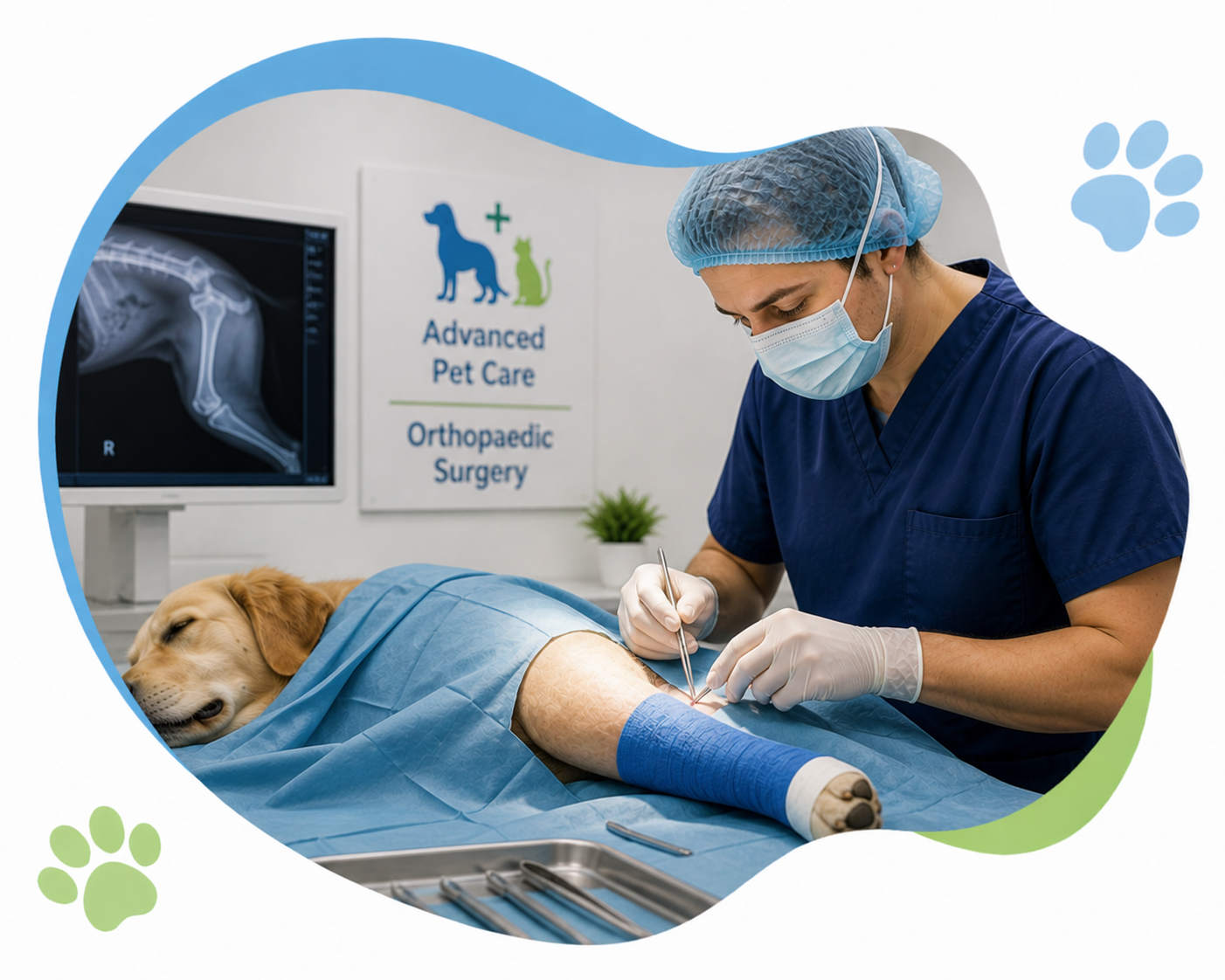
Pet orthopaedic surgery Melbourne is a highly effective solution for many of these conditions, and at our veterinary clinic, it's performed by experienced vets using modern surgical techniques and compassionate care.
Whether your pet has suffered a sudden injury or has been slowly losing mobility over months, early intervention almost always leads to better outcomes. Our team is here to assess, diagnose, and guide you through every step.
What Is Veterinary Orthopaedic Surgery?
Veterinary orthopaedic surgery covers a range of procedures that address problems with bones, joints, ligaments, tendons, and muscles. It is the branch of veterinary medicine focused on the musculoskeletal system — everything that keeps your pet moving, bearing weight, and staying active.
Common Orthopaedic Procedures
- • TPLO surgery for cruciate ligament injuries
- • Patellar luxation repair
- • Hip dysplasia treatment
- • Fracture repair and stabilisation
- • Elbow dysplasia surgery
- • Joint arthroscopy
Honest Treatment Advice
Not every orthopaedic problem requires surgery. In some cases, managed rest, physiotherapy, weight control, and pain relief are appropriate first steps. Our team will always provide honest guidance on the best treatment pathway for your pet.
Why Is Orthopaedic Health Important for Your Pet?
Pets naturally hide discomfort, meaning serious joint and bone problems can progress unnoticed.
Untreated ligament injuries often worsen over time, resulting in complete ruptures and arthritis.
Hip and elbow conditions become increasingly painful when left unmanaged.
Early intervention improves mobility, comfort, and long-term outcomes.
Orthopaedic treatment helps pets remain active, confident, and pain-free for longer.
Common Signs Your Pet May Need Orthopaedic Assessment
Limping or favouring one leg
Difficulty walking, running, jumping, or climbing stairs
Stiffness after resting
Joint swelling, heat, or tenderness
Clicking, popping, or grinding sounds
Muscle loss in one or more limbs
Persistent licking or chewing at a limb
Sudden yelping during normal activity
Changes in posture or stance
Reduced playfulness or social withdrawal
Benefits of Professional Orthopaedic Surgery
Restored mobility and movement
Long-term pain relief
Reduced arthritis progression
Improved quality of life
Better outcomes through early intervention
Our Approach to Pet Orthopaedic Surgery
Initial Consultation
Diagnostic Imaging
Diagnosis & Treatment Planning
Pre-Surgical Preparation
Surgery
Recovery & Rehabilitation
Initial Consultation
Diagnostic Imaging
Diagnosis & Treatment Planning
Pre-Surgical Preparation
Surgery
Recovery & Rehabilitation
Orthopaedic Conditions We Commonly Treat
Our team has extensive experience diagnosing and treating a wide range of musculoskeletal conditions in dogs and cats.
Cranial Cruciate Ligament (CCL) Rupture
Patellar Luxation
Hip Dysplasia
Elbow Dysplasia
Long Bone Fractures
Luxating Joints
Osteochondrosis Dissecans (OCD)
Septic Arthritis
Bone Cysts & Benign Tumours
Developmental Skeletal Conditions
Certain breeds carry a higher genetic risk for musculoskeletal problems. Early orthopaedic assessments can help identify issues before they significantly impact mobility and quality of life.
Why Pet Owners Across Melbourne Choose Our Clinic
Experienced Surgical Team
Skilled vets with extensive orthopaedic surgery experience and ongoing professional development.
Thorough Planning
Every case is fully assessed before surgery is recommended.
In-House Diagnostics
X-rays, blood testing and ultrasound available on-site.
Transparent Communication
Clear explanations about diagnosis, options, costs and recovery.
Dedicated Post-Op Support
Guidance throughout recovery, not just on surgery day.
Whole-of-Life Care
From puppy health checks to senior pet care, everything under one roof.
Frequently Asked Questions
Costs vary depending on the procedure, your pet's size, and the complexity of the condition. TPLO surgery typically ranges from $3,500–$6,000, while other procedures vary accordingly. We provide a detailed estimate after assessment and imaging.
Most pets require 8–12 weeks of restricted activity following major orthopaedic procedures. Recovery timelines depend on the condition, surgery performed, and rehabilitation progress.
TPLO (Tibial Plateau Levelling Osteotomy) is the most commonly performed orthopaedic procedure in dogs and is used to treat cranial cruciate ligament (CCL) rupture.
Yes. Age alone does not prevent surgery. We perform comprehensive pre-operative assessments and blood testing to evaluate anaesthetic risk and ensure your pet is a suitable candidate.
Many pets regain full or near-full function after surgery. Outcomes depend on the condition, procedure, and commitment to post-operative rehabilitation and recovery guidelines.
An orthopaedic consultation will determine the best approach. Some conditions can be managed conservatively, while others such as fractures, full cruciate ruptures, or severe hip dysplasia are often best treated surgically.
Schedule Your Pet's Dental Appointment Today
Ready to give your pet the care they deserve? Book an appointment with our experienced Melbourne veterinarians today.
