

Desexing
Puppy Desexing Melbourne
If you're searching for trusted puppy desexing services, you've come to the right place. Desexing — also known as spaying (for females) or neutering (for males) — is one of the most responsible decisions you can make for your pet's long-term health.
It's a routine surgical procedure that our experienced team performs every day with the highest standards of safety, comfort, and aftercare.
Beyond population control, desexing offers significant health and behavioural benefits that can genuinely improve your pet's quality of life. From reducing the risk of certain cancers to minimising roaming and aggressive tendencies, the benefits are well-established and supported by veterinary science.
What Is Desexing?
Desexing is a surgical procedure that removes a pet's reproductive organs, preventing them from producing offspring. For female dogs and cats, this means removing the ovaries and uterus. For males, it involves the removal of the testicles.
What's Included?
- • Comprehensive health assessment
- • Pre-surgical examination
- • Safe anaesthetic monitoring
- • Surgical desexing procedure
- • Pain management plan
- • Recovery and aftercare support
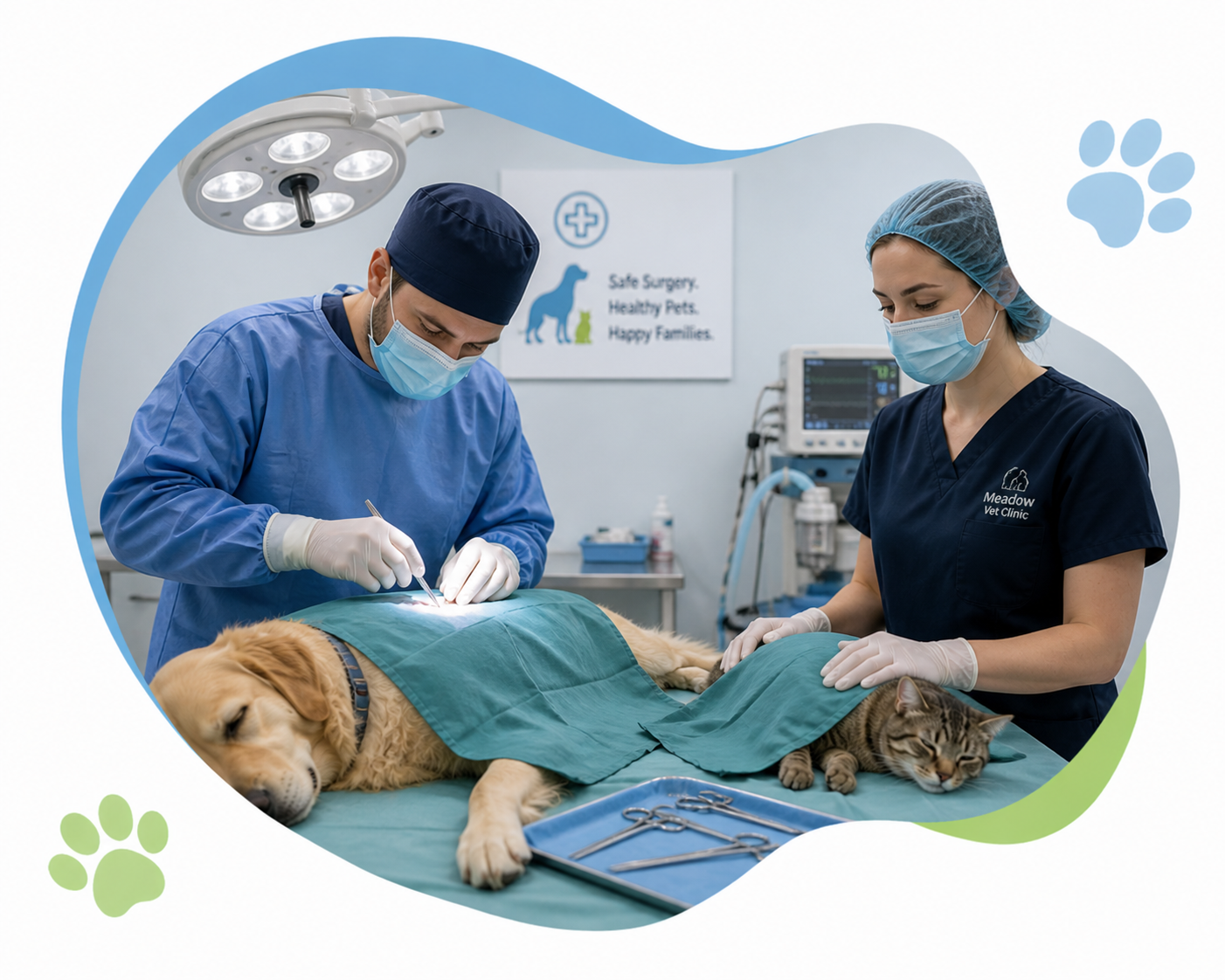
Safety Comes First
Before any surgery, our team conducts a thorough health assessment to ensure your pet is fit and healthy for the procedure. Where appropriate, pre-anaesthetic blood testing may also be recommended to maximise safety and provide peace of mind.
Why Is Desexing Important for Your Pet?
Desexed females have a significantly lower risk of mammary tumours and uterine infections, while males have a reduced risk of testicular cancer and prostate issues.
Many desexed pets are calmer, less likely to roam, and show reduced aggression or territorial marking.
Desexing prevents females from entering repeated heat cycles, reducing stress and discomfort.
Responsible desexing helps reduce the stray animal population and supports animal welfare across Melbourne.
Studies suggest desexed pets often enjoy longer, healthier lives with fewer reproductive health complications.
When Is the Right Time to Desex Your Pet?
Smaller dog breeds are commonly desexed between 4–6 months of age.
Larger breeds may benefit from waiting until 12–18 months to allow for full development.
Cats are typically desexed from 4–6 months of age, ideally before the first heat cycle.
Rescue and adopted pets should be assessed during their first veterinary consultation.
Female pets experiencing irregular seasons or false pregnancies should be examined promptly.
Male pets displaying excessive roaming, mounting, or aggression may benefit from earlier desexing.
Breed, size, lifestyle, and health history all influence the ideal timing.
Individual veterinary advice is always the best way to determine the right approach.
Early planning allows procedures to be scheduled at the most appropriate stage of development.
Our team can guide you through the best timing for your individual pet.
Benefits of Professional Veterinary Desexing
Pain-managed recovery and enhanced comfort
Performed by experienced veterinary professionals
Pre-surgical health screening and assessment
Personalised aftercare instructions
Ongoing support and follow-up care
Our Approach to Desexing
Initial Consultation & Wellness Assessment
Pre-Anaesthetic Diagnostics
The Procedure
Warm Recovery
Discharge & Aftercare
Follow-Up Check
Initial Consultation & Wellness Assessment
Pre-Anaesthetic Diagnostics
The Procedure
Warm Recovery
Discharge & Aftercare
Follow-Up Check
Conditions We Commonly Prevent Through Desexing
Desexing is one of the most effective preventive procedures in veterinary medicine and helps reduce the risk of numerous reproductive health conditions.
Pyometra (life-threatening uterine infection)
Mammary gland tumours
Testicular cancer
Benign prostatic hyperplasia
Ovarian cysts
Uterine disorders
Pseudopregnancy (false pregnancy)
Hormone-dependent tumours
Unwanted pregnancies
Many reproductive health complications
Desexing forms an important part of preventative healthcare and can be combined with vaccinations, microchipping, parasite prevention, nutrition guidance, and routine wellness care.
Why Pet Owners Choose Our Veterinary Clinic
Experienced Surgical Team
Hundreds of successful desexing procedures are performed every year by our experienced veterinary team, with a strong focus on patient safety, comfort, and long-term wellbeing.
Advanced Monitoring Equipment
Modern anaesthetic monitoring technology allows us to closely track your pet throughout the procedure and recovery process for added peace of mind.
Transparent Pricing
No hidden surprises. We explain treatment options and costs clearly before proceeding so you can make informed decisions for your pet.
Fear-Free Handling
Our team uses gentle, low-stress handling techniques designed to keep your pet calm and comfortable from arrival through to discharge.
In-House Diagnostics
Fully equipped with in-house diagnostics, digital imaging, laboratory testing, and pharmacy services to support efficient and comprehensive care.
Caring & Communicative Team
We take the time to answer every question, explain procedures clearly, and provide ongoing support so you feel confident throughout your pet's healthcare journey.
Whether you're a long-time client or visiting us for the first time, you can expect the same warm, attentive service that has earned the trust of pet owners across Melbourne. Our commitment is simple: treat every pet as if they were our own and provide exceptional care at every stage of life.
Frequently Asked Questions
Most vets recommend desexing at around 4–6 months for small breeds, and between 12–18 months for large or giant breeds to allow for musculoskeletal maturity. For kittens, 4–6 months is the standard recommendation, ideally before the first heat cycle. Your vet will advise based on your pet's breed, size, and overall health.
Discomfort is well managed with modern anaesthesia and pain relief protocols. Your pet will receive pain medication during the procedure and medication to take home. Most pets are bright and eating normally within 24–48 hours, although mild lethargy and tenderness during the first couple of days is normal.
Pricing varies based on your pet's species, sex, weight, and whether additional services such as microchipping or pre-anaesthetic blood testing are required. We provide a full cost breakdown during your consultation with no hidden fees.
Most pets recover fully within 10–14 days. During this period, strenuous activity should be restricted, the incision site kept clean and dry, and licking prevented with an appropriate recovery collar. A follow-up check helps ensure healing is progressing as expected.
As with any surgical procedure, there are small risks associated with anaesthesia and surgery. However, desexing is an extremely common procedure with a strong safety record when performed by an experienced veterinary team. Pre-surgical screening further helps minimise potential risks.
Yes. In most cases, older or overweight pets can still be safely desexed. Additional precautions and pre-anaesthetic testing may be recommended depending on their health status. A thorough assessment will help determine the safest approach for your pet.
Schedule Your Pet's Dental Appointment Today
Ready to give your pet the care they deserve? Book an appointment with our experienced Melbourne veterinarians today.
